MGM Healthcare Introduces Advanced Mobile ECMO Ambulance Service
Monday, 08 December 2025, 10:51 IST
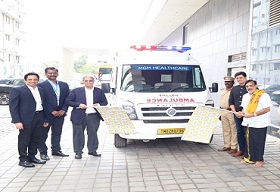
- MGM Healthcare launches a mobile ECMO ambulance for on-site life-support
- Unit enables faster ECMO initiation during cardiac and respiratory emergencies
- Team includes specialized doctors, perfusionists, and trained nurses
MGM Healthcare has launched a mobile ECMO (Extracorporeal Membrane Oxygenation) ambulance designed to deliver advanced heart and lung life-support directly to patients in critical condition. ECMO is a specialised system used when the heart and lungs can no longer function adequately despite standard medical treatment. Early ECMO support is often crucial to preventing organ damage in severe emergencies.
The mobile unit was officially launched in Chennai in the presence of ACP P.K. Ravi, MLA M.K. Mohan, and Rajesh R. Trivedi, Managing Trustee of ALERT Foundation. Senior clinicians from MGM Healthcare including Dr. K.R. Balakrishnan, Dr. Suresh Rao, and Dr. Senathi Nanda Kishore also attended the event.
Equipped with advanced ECMO technology, the ambulance is supported by a team of critical care specialists, perfusionists, and trained nurses. This setup allows the team to stabilise patients at their location and begin ECMO while transporting them to the hospital, significantly reducing delays that can impact survival.
ECMO is typically used as a last-resort life-support option when patients do not respond to conventional methods. By bringing ECMO directly to the patient, the hospital aims to greatly improve outcomes for individuals suffering from cardiac arrest, acute respiratory failure, or major cardiopulmonary collapse.
Also Read: Apollo Unveils Dedicated Heart & Lung Transplant Unit in Bengaluru
Dr. Senathi Nanda Kishore noted that rapid ECMO initiation can make a meaningful difference in recovery. Dr. Balakrishnan emphasized that ECMO often serves as the final lifeline for critically ill patients. Dr. Rao added that providing ECMO at the patient’s location marks a major step forward in emergency care, with the potential to significantly raise survival rates.