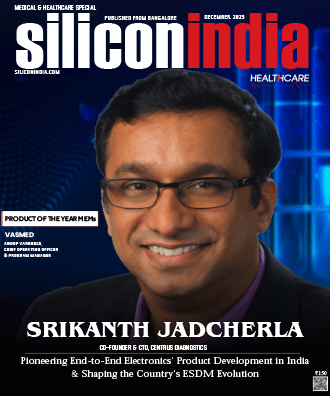
Srikanth Jadcherla : Pioneering End-to-End Electronics’ Product Development in India & Shaping the Country’s ESDM Evolution


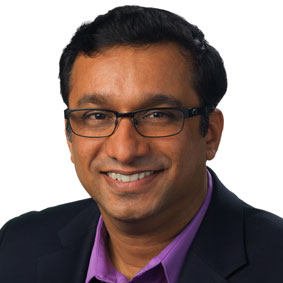
Srikanth Jadcherla
Co-Founder & CTO
Today, the sector is at a crossroads, balancing opportunities in innovation with persistent structural challenges. When Srikanth Jadcherla embarked on his journey in 2004 to develop cutting-edge Electronic Design Automation (EDA) products in Bangalore, he faced wide spread skepticism.
The startup culture was at a very nascent stage in India, and most VLSI and EDA engineers were working for large multinational companies, with the product development concentrated abroad. ArchPro, which he co-founded, broke this mold by developing the most sophisticated EDA solutions in India and, eventually, caught the attention of Synopsys, leading to its acquisition in 2007.
That was indeed a turning point for India, indicating that not only could the country play a role in global technology support but also product innovation leadership. “At the time, people called us crazy, but we believed that India could develop products at par with global standards”, reflects Srikanth Jadcherla, Co-Founder & CTO, Centrus Diagnostics.
Over the years, India has seen a considerable increase in R&D capabilities. Engineers who used to take on development and validation responsibilities now lead product architecture and end-to-end conception and design within their organizations. Large corporations still maintain architectural capabilities overseas for advanced domains such as AI; however, the mantle of risktaking and innovation is steadily passing onto startups within India.
Companies like iMedrix and Centrus Diagnostics have set examples by manufacturing medical devices and diagnostics solutions in the country, pursued global regulatory approvals, and established products to compete globally. “The ability to conceptualize, design, and validate products entirely in India demonstrates the maturity of our talent pool and our readiness for global challenges”, says Srikanth.
India’s Rising Global Medtech Hub
The last decade has seen a surge of remarkable innovations in healthcare technology, where India is making a global impact. Companies like iMedrix with its mobile ECG devices, and Centrus Diagnostics have led R&D domestically, manufacturing globally, and pursuing/obtaining US FDA clearances-a first in their respective domains.
Similarly, Forus in eyecare and Niramai in breast cancer screening have developed solutions fully based in India, thereby underlining the ability of the country to deliver products meeting rigorous international standards. Beyond product development, India has emerged as a leader in healthcare service innovation. Platforms such as Medibuddy and Tata 1MG are changing patient care by reaching services at the doorstep of users-a reflection that this is an ecosystem which can thrive equally with product and service innovation.
The convergence of mature talent, knowledge of regulations, and a host of innovative service models has positioned India to be an unbeatable hub for medical technology. Regulatory frameworks that include ISO 13485 certification, along with a unique opportunity for faster and cost-effective clinical trials locally, give startups an edge. However, capital remains a bottleneck to globalization, since Indian
venture capitalists have several foreign exchange restrictions that impede large-scale investments abroad. Despite these obstacles, the medtech sector typifies a successful synthesis of talent, infra structure, and regulatory foresight.
Upskilling India’s ESDM Workforce
The evolution of India’s ESDM sector has been underpinned by a steady improvement in workforce capabilities. The engineers who entered the industry fresh out of college in the 1990s and early 2000s are now mature professionals, experienced enough to manage entire product lifecycles. In addition, institutional efforts like the Indian Electronics and Semi conductor Association-IESA-and initiatives such as Seer Akademi have developed skills in advanced domains such as VLSI and embedded systems. Programs like NPTEL democratised special technical courses, enabling widespread learning even in resource-constrained environments.
Not with standing these developments, challenges remain. Traditional university systems have persistent structures that limit flexibility and innovation in the development of curricula. Complementary methods include non-traditional learning through digital courses, social media-based learning, and bite-sized modules of learning that provide easily accessible means for continually acquiring new skills.
These are particularly suited to an era dominated by AI, where workforce reskilling is imperative. “The AI revolution demands a new approach to learning, where fractional, accessible knowledge can be aggregated to produce highly skilled professionals”, observes Srikanth. This underscores the need for India to integrate formal and informal learning channels to prepare for a technology-driven future.
Policies Shaping India's ESDM Growth
The trajectory of India’s ESDM sector has been profoundly influenced by both ecosystem and policy developments. While domestic consumption and communication infrastructure have grown rapidly, India has lacked large-scale initiatives in the localization of manufacturing for consumer electronics, mostly due to heavy reliance on Chinese supply chains. Earlier attempts by homegrown companies like Videocon and Micromax at establishing viable manufacturing frameworks could not be sustained and led to the market penetration by global brands. However, in service-led technology innovation, India has fared well, such as with Flipkart, Ola, Swiggy, and PhonePe, which have uniquely created scalable solutions for Indian conditions.
Policy initiatives like Production Linked Incentives and the establishment of alternative manufacturing hubs, including Foxconn, are efforts in the right direction toward creating a robust domestic manufacturing ecosystem. However, the regulatory and corporate frameworks remain so elaborate that this inhibits fastgrowth. Administrative compliance accounting procedures, and bureaucratic inefficiencies consume considerable management bandwidth, thereby limiting risk-taking and deep supply chain investments. “To truly compete globally, India must simplify corporate laws and create frameworks that incentivize IP ownership, startup growth and innovation without excessive intervention”, emphasizes Srikanth.
India’s AI Opportunity & Challenges
While India has made strides in ESDM and medtech, the AI landscape reveals both potential and gaps. Even with abundant technical talent, the risk appetite of investors and support from venture capital remain limited for foundational AI technologies, such as LLMs and generative AI. AI at scale requires high investment and tolerance for failure, which is an area where India has traditionally been conservative.
However, emerging opportunities in smaller, personalized AI models and narrow-domain agents offer fertile ground for innovation. The IT/ITES sector will see a transformational shift in the near future, which calls for an immediate need to address AI-driven change.
Automation and generative technologies are bound to alter the nature of workforce demand, posing both a challenge and an opportunity for India’s technological ecosystem. For startups that can assume calculated risks, the AI era could trigger revolutionary ventures, supplementing the overall growth of ESDM and medtech observed during the past couple of decades.
Future Vision
India’s ESDM sector has come a long way since the early 2000s. From a landscape dominated by foreign-led product development to a thriving environment where end-to-end innovation is possible, the country now boasts a mature talent pool, evolving policy frameworks, and a unique capacity for global-standard medical and technological solutions. Medtech, in particular, exemplifies India’s competitive edge, combining regulatory advantages, cost efficiencies, and access to a diverse population for testing and data collection.
Challenges remain particularly in manufacturing self-reliance, policy simplification, risk-taking in AI, and venture capital access but the progress is undeniable. As India continues to nurture its talent, innovate in both products and services, and leverage its unique regulatory and market advantages, the next decade promises even greater strides.
Upskilling India’s ESDM Workforce
The evolution of India’s ESDM sector has been underpinned by a steady improvement in workforce capabilities. The engineers who entered the industry fresh out of college in the 1990s and early 2000s are now mature professionals, experienced enough to manage entire product lifecycles. In addition, institutional efforts like the Indian Electronics and Semi conductor Association-IESA-and initiatives such as Seer Akademi have developed skills in advanced domains such as VLSI and embedded systems. Programs like NPTEL democratised special technical courses, enabling widespread learning even in resource-constrained environments.
Not with standing these developments, challenges remain. Traditional university systems have persistent structures that limit flexibility and innovation in the development of curricula. Complementary methods include non-traditional learning through digital courses, social media-based learning, and bite-sized modules of learning that provide easily accessible means for continually acquiring new skills.
These are particularly suited to an era dominated by AI, where workforce reskilling is imperative. “The AI revolution demands a new approach to learning, where fractional, accessible knowledge can be aggregated to produce highly skilled professionals”, observes Srikanth. This underscores the need for India to integrate formal and informal learning channels to prepare for a technology-driven future.
Srikanth Jadcherla believes that India’s ESDM sector stands at a pivotal moment which comes with mature design talent, innovative medtech solutions, and emerging AI capabilities, the country has the potential to lead globally if it can bridge gaps in manufacturing, policy clarity, and risk-taking
Policies Shaping India's ESDM Growth
The trajectory of India’s ESDM sector has been profoundly influenced by both ecosystem and policy developments. While domestic consumption and communication infrastructure have grown rapidly, India has lacked large-scale initiatives in the localization of manufacturing for consumer electronics, mostly due to heavy reliance on Chinese supply chains. Earlier attempts by homegrown companies like Videocon and Micromax at establishing viable manufacturing frameworks could not be sustained and led to the market penetration by global brands. However, in service-led technology innovation, India has fared well, such as with Flipkart, Ola, Swiggy, and PhonePe, which have uniquely created scalable solutions for Indian conditions.
Policy initiatives like Production Linked Incentives and the establishment of alternative manufacturing hubs, including Foxconn, are efforts in the right direction toward creating a robust domestic manufacturing ecosystem. However, the regulatory and corporate frameworks remain so elaborate that this inhibits fastgrowth. Administrative compliance accounting procedures, and bureaucratic inefficiencies consume considerable management bandwidth, thereby limiting risk-taking and deep supply chain investments. “To truly compete globally, India must simplify corporate laws and create frameworks that incentivize IP ownership, startup growth and innovation without excessive intervention”, emphasizes Srikanth.
India’s AI Opportunity & Challenges
While India has made strides in ESDM and medtech, the AI landscape reveals both potential and gaps. Even with abundant technical talent, the risk appetite of investors and support from venture capital remain limited for foundational AI technologies, such as LLMs and generative AI. AI at scale requires high investment and tolerance for failure, which is an area where India has traditionally been conservative.
However, emerging opportunities in smaller, personalized AI models and narrow-domain agents offer fertile ground for innovation. The IT/ITES sector will see a transformational shift in the near future, which calls for an immediate need to address AI-driven change.
Automation and generative technologies are bound to alter the nature of workforce demand, posing both a challenge and an opportunity for India’s technological ecosystem. For startups that can assume calculated risks, the AI era could trigger revolutionary ventures, supplementing the overall growth of ESDM and medtech observed during the past couple of decades.
Future Vision
India’s ESDM sector has come a long way since the early 2000s. From a landscape dominated by foreign-led product development to a thriving environment where end-to-end innovation is possible, the country now boasts a mature talent pool, evolving policy frameworks, and a unique capacity for global-standard medical and technological solutions. Medtech, in particular, exemplifies India’s competitive edge, combining regulatory advantages, cost efficiencies, and access to a diverse population for testing and data collection.
Challenges remain particularly in manufacturing self-reliance, policy simplification, risk-taking in AI, and venture capital access but the progress is undeniable. As India continues to nurture its talent, innovate in both products and services, and leverage its unique regulatory and market advantages, the next decade promises even greater strides.